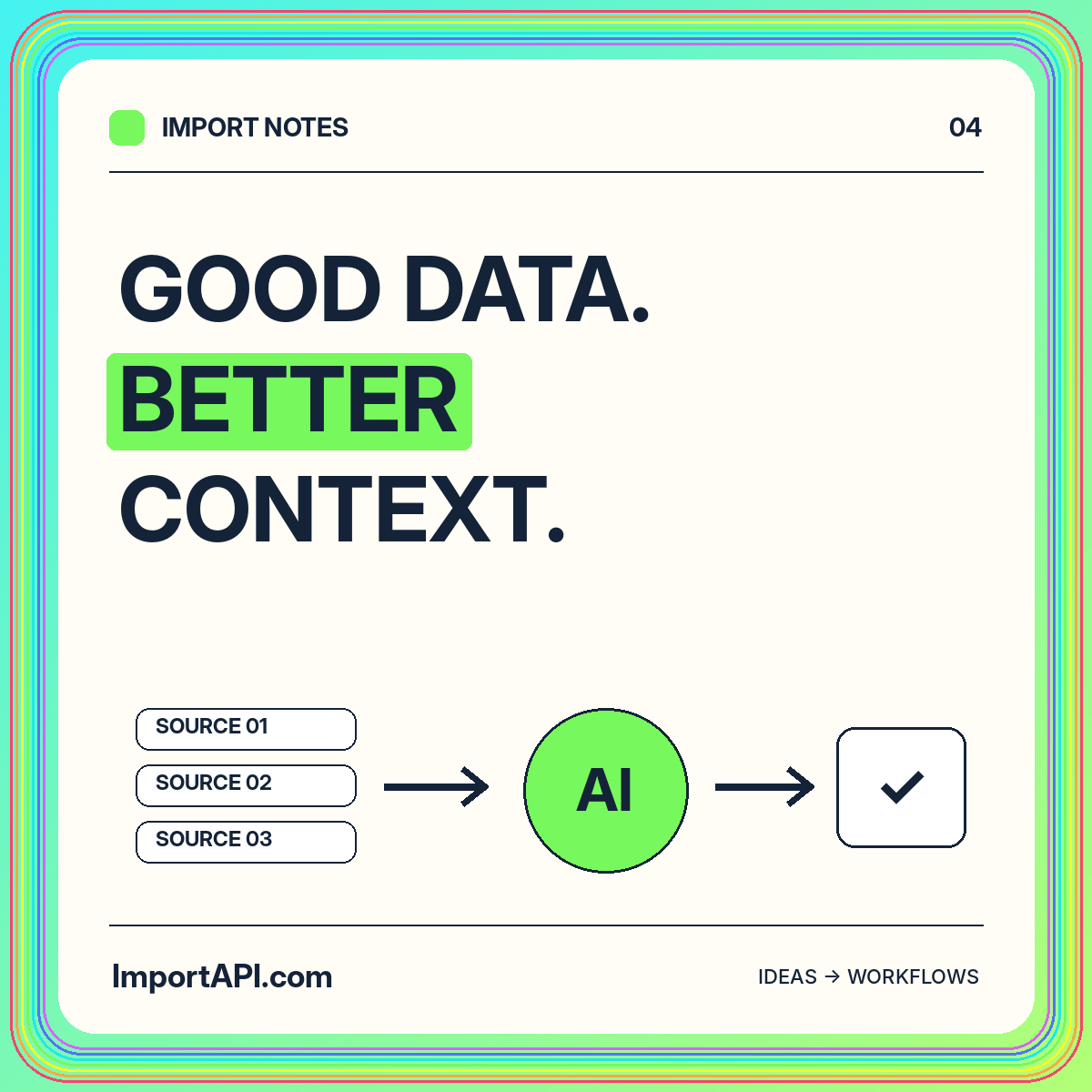
Better context starts before the prompt.
Prepare a knowledge collection with meaningful chunks, source lineage, permission boundaries, and evaluation grounded in real questions.
Read the guideGOOD DATA. GREAT POSSIBILITIES.
Build a retrieval collection around evidence, source lineage, and enforceable access.
Write representative questions and identify the source passages expected to support each answer. Include questions outside the collection’s scope and questions with conflicting or obsolete material. These cases make evaluation more meaningful than a single impressive demonstration.
Review extracted content before chunking it. Missing table labels or detached prerequisites can make a passage misleading even when retrieval finds it successfully.
Create chunks around useful units of meaning. Attach document identity, revision, section path, and the access attributes the serving layer actually enforces. Test whether a restricted source remains restricted in results, citations, previews, and caches.
Record the configuration used for transformations and embeddings. Changes to either can require reprocessing even when the source file remains unchanged. Compare a candidate index against a reviewed reference set before switching the application.
Plan how edits, deletions, and revoked permissions propagate through derived records. Distinguish current instructions from historical revisions. Keep imported text as evidence rather than authority over the application’s tool permissions or operating instructions.
Measure failed jobs, correction work, and retrieval quality alongside throughput. A smaller collection with explainable results is a useful starting point for expanding the system responsibly.
Choose a representative source, an owner for the destination contract, and a small set of results that a reviewer can inspect. Include a correction case and an interrupted attempt before expanding the workflow.
The developer guides connect these planning decisions to record shapes and local examples. Keep your implementation narrow enough that its outcome is easy to explain.
Prepare a knowledge collection with meaningful chunks, source lineage, permission boundaries, and evaluation grounded in real questions.
Read the guideImport prompts as maintained artifacts with explicit roles, declared variables, review history, repeatable tests, and a rollback path.
Read the guide